Showing posts with label automotive-cars. Show all posts

Tuesday, July 24, 2018

New Impreza Sedan Automatically Applies Brakes When Backing


The new Impreza, which Fuji Heavy Industries (FHI) Ltd showed off at New York International Auto Show 2016, comes with a system that automatically applies the brakes at the time of backing the car up.The New Impreza sedan

The system detects obstacles located behind the car with sensors embedded in the rear bumper. When there is a possibility that the car crashes into an obstacle, it sets off a voice alarm. If the driver does not avoid the crash by, for example, operating the brakes, the system automatically applies the brakes to avoid the crash or reduce the damage caused by the crash.

To improve visibility at night, the new Impreza has the "high-beam assist" function using a stereo camera. It automatically switches between high and low beams of the headlamps in accordance with the states of preceding and oncoming vehicles.

The vehicle also has the "steering wheel-interlocked headlamp" function. It moves the light axes of the headlamps in accordance with steering so that light is directed to the vehicle"s traveling direction at an intersection, curve, etc. As a result, the nighttime visibility was further improved.

Moreover, the new Impreza features the "Eyesight ver.3" safe driving support system and is capable of detecting blind spots. The Eyesight ver.3 offers functions such as adaptive cruise control (ACC) supporting automatic braking and all vehicle speeds as well as lane departure prevention.Interior of the new impreza

The new Impreza is equipped with the "FB20 Type" naturally-aspirated (NA) horizontally opposed direct-injection engine with a displacement of 2.0L. The engine was developed by replacing about 80% of the components of FHI"s previous NA engine with the same displacement and reducing the weight. The maximum output of the FB20 Type is 113kW, which is 3kW higher than that of the previous engine.


Friday, July 20, 2018

New "Boon," "Passo" Compacts Feature High Fuel Efficiency


The new "Boon" and "Passo" compact cars are the gasoline engine vehicles (two-wheel-drive vehicles excluding light cars) that have the highest fuel efficiency under the JC08 test mode.The New Boon with improved Fuel Efficiency

The new Boon and Passo were released by Daihatsu Motor Co Ltd and Toyota Motor Corp, respectively, April 12, 2016. The fuel efficiency of 28.0km/L (approx 65.9mpg in the US) was realized by using fuel-saving technologies that Daihatsu developed for light cars. It is 1.5% higher than the fuel efficiency of the previous models.

This time, the compression ratio of the engine was increased from 11.5 to 12.5, significantly contributing to the improvement of fuel efficiency. It was realized by employing the "Dual Injector" and improving the "EGR (exhaust gas recirculation) System," which improves fuel efficiency by recirculating exhaust gas.

The engine of the new vehicles is the "1KR-FE" 1.0L in-line three-cylinder engine, which is the same as the engine of the previous models. But the Dual Injector, which is used for the engine of Daihatsu"s "Mira e:S" light car, was employed. It injects fuel into the combustion chamber by using two injectors per cylinder.The New Passo with improved Fuel Efficiency

The number of injection ports of the previous models" engine is six per injector, but the number was increased to eight for the new models. As a result, the particle size of injected fuel was reduced. The shape of the suction port was changed so that strong tumble flows (longitudinal vortexes of air-fuel mixture in cylinders) can be generated.

Also, the Atkinson cycle was employed, and friction loss was reduced by changing the piston shape. Furthermore, the responsiveness of the EGR valve was improved to increase the amount of reused exhaust gas. The maximum output and maximum torque of the new engine are 51kW and 92N·m, respectively, which are the same as those of the previous models" engine despite the improvement in fuel efficiency.


Wednesday, July 18, 2018

Honda Launches Fuel-cell Vehicle With Drive Range of 750km


Honda Motor Co Ltd started lease sale of the "Clarity Fuel Cell" fuel-cell vehicle (FCV) March 10, 2016.

It is the first sedan-type fuel-cell vehicle that has realized an interior space large enough for five adults by storing the power train under the front hood. Its drive range is about 750km (approx 466 miles) under the JC08 test mode. With a tank capacity of 141L, 5.0kg of hydrogen (filling pressure: 70MPa) can be used for driving the vehicle.


In the case that the vehicle is sold, its reference price starts from ¥7,660,000 (approx US$67,299). It is the second commercially-available fuel-cell vehicle, following Toyota Motor Corp"s Mirai FCV.

Honda expects to lease about 200 units of the Clarity Fuel Cell in fiscal 2016. And it plans to collect users" opinions and check how the vehicle is used. Asked about sale of the vehicle to individuals, Honda Executive Sho Minekawa said, "We will start it after slightly more than a year." When a reporter asked a question about the possibility of developing a fuel-cell SUV (sport utility vehicle), etc, Honda President Takahiro Hachigou said, "It is still under consideration, but we want to develop various cars powered by fuel cells."

For the Clarity Fuel Cell equipped fuel-cell vehicle, Honda employed a newly-developed platform. The platform has a frame structure integrating the front and rear parts for the protection of components and the improvement of the interior space"s shock resistance.


The platform is expected to be applied to environmentally-friendly vehicles such as electric vehicles (EVs) and plug-in hybrid vehicles (PHEVs). A power train including an engine can be stored in the front space, and a battery can be placed under the floor or near the hydrogen tank.

A cutaway model of the fuel-cell vehicle

Though Hachigou did not mentioned a specific date when the platform will be applied to other vehicles, he said, "We will apply it to other vehicles such as a PHEV one by one."

The maximum output and maximum torque of the drive motor are 130kW and 300N·m, respectively. The maximum output and output density of the fuel cell stack are 103kW and 3.1kW/L. The FCV uses a lithium-ion battery. It measures 4,915 (L) x 1,875 (W) x 1,480mm (H), and its wheelbase is 2,750mm. Its mass is 1,890kg.

The Clarity Fuel Cell shares some parts such as the circuit board of an inverter, DC-DC converter and battery cell with the Accord PHEV. On the other hand, Honda newly-developed the cases of a boosting converter and inverter, which are expected to be used for other vehicles to be released in the future.


Monday, July 16, 2018

Toyota Announces Overview of "Lexus LC500h" HEV


Toyota Motor Corp announced the overview of the "Lexus LC500h" coupe to be exhibited at Geneva Motor Show 2016, which will be open to the public from March 3 to 13, 2016.The Lexus LC500h HEV

The LC500h is a hybrid version of the Lexus LC500 gasoline vehicle, which was announced in January 2016 at Detroit Motor Show (NAIAS) 2016.

For the LC500h, Toyota employed the "Multi-stage Hybrid System," which uses two motors, as well as a stepped automatic transmission. As a result, it became possible to generate a strong driving force even at low speeds. Moreover, the vehicle can drive on electricity in a wider speed range.Rear View of Lexus LC500h

The LC500h comes with the "2GR-FXS" 3.5L V-6 engine, whose maximum output and maximum torque are 220kW/6,600rpm and 348N·m/4,900rpm, respectively. The maximum output of the entire system combining the engine and the motors is 264kW. The lithium-ion battery for driving the motors is stored under the floor.

The LC500 gasoline vehicle is equipped with a 5.0L V-8 engine whose maximum output and maximum torque are 349kW/7,100rpm and 530N·m/4,800-5,600rpm, respectively.

The side view of the Lexus LC500hThe interior of the LC500h


Concept Car Deforms to Reduce Air Resistance While Running


Toyoda Gosei Co Ltd showed the concept car Flesby covered with a polymer material as a

concept car flesby future car.

The concept car "Flesby," was exhibited at the 44th Tokyo Motor Show 2015, which will be open to the public from Oct 30 to Nov 8, 2015, in Tokyo.

The concept of the Flesby is to ensure safety for pedestrians by using a polymer material and to change the shape of the vehicle so that it has less air resistance when it is running. Toyoda Gosei considers that it is ideal to change the strength and shape of the vehicle in accordance with driving status and external environment.

Moreover, LED lamps are used to display the driver"s intentions such as "Turn Left" and "Stop" and messages including "Do Not Rush Out (in front of the vehicle)" to communicate with other drivers, etc.

The concept car Flesconcept car flesbyby is a single seater and measures 3,040 (L) x 1,200 (W) x 1,370mm (H). It is a compact car expected to be used for shopping and driving in the neighborhood. It seemed that the vehicle was designed with emphasis on safety.

According to Toyoda Gosei, the Flesby is still in the phase of concept, and the company plans to start from developing materials.


Thursday, July 12, 2018

New Toyota Sienta Based on Aqua"s Hybrid System


The hybrid version of the Toyota Sienta small minivan, which Toyota Motor Corp released July 9, 2015, is based on the system of the Aqua small hybrid vehicle (HEV).The New Toyota Sienta

On the other hand, Toyota employed a water-cooled motor and generator instead of air-cooled ones to improve efficiency and changed the location and thickness of the battery pack placed in the center of the vehicle to lower the height of the door aperture.

As in the case of the Aqua, the Toyota Sienta combines the "1NZ-FXE" 1.5L engine with a motor and generator.

The transaxle of the new Toyota Sienta consists of a motor, generator, planetary gear mechanism, reduction gears, etc. Toyota employed the water-cooled motor and generator to enhance cooling efficiency. Also, the company lowered the gear ratio of the differential gears in the aim of coping with the increase in mass because the new Toyota Sienta is a seven-seat vehicle.

In the Aqua, the battery pack is located under the rear seats. On the other haSide view of the new Toyota Sientand, the battery pack of the new Sienta extends to under the front seats so that the height of the rear door aperture is lowered to 330mm and even women and children can easily get in and out of the vehicle.

Toyota reduced the thickness of the battery pack by about 3cm. Though the company used the same cell, it reduced the size of the air passageway used for cooling. A large-capacity, high-pressure-loss blower was employed to keep cooling performance despite the narrower air passageway.

Engine room of the new Toyota Sienta


Sunday, July 8, 2018

Subaru Legacy Ranks 1st in Collision Safety


Japan"s Ministry of Land, Infrastructure, Transport and Tourism (MLIT) and National Agency for Automotive Safety & Victims" Aid (NASVA) announced the results of the "Automotive Assessment (for fiscal 2014)," which compares the safety performances of commercially-available cars, May 8, 2015.

In the "collision safety evaluation," which evaluates safety against accidents, 10 of the 13 vehicles tested were given the top rating of "five stars."

In the collision safety evaluation, the safety of each vehicle type is evaluated based on the actual data (e.g. the results of collision tests using actual vehicles and advanced safety technologies). According to MLIT, the average score on the evaluation is showing an increasing trend. In fiscal 2014, a new record of 182.5 points was marked, and 71.4% of the vehicles tested were given five stars.

"It indicates that vehicle safety is improving overall," MLIT said.

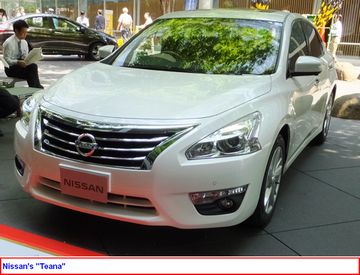
The 10 five-star vehicles are Toyota Motor Corp"s "Voxy/Noah/Esquire" and "Harrier," Nissan Motor Co Ltd"s "Teana," Fuji Heavy Industries (FHI) Ltd"s (Subaru) "Forester," "Levorg/WRX" and "Legacy," Honda Motor Co Ltd"s "Vezel" and "Grace" and Mazda Motor Corp"s "Mazda3" and "Demio."

Of the ten vehicles, FHI"s Legacy was given the highest score (188.8/208). Also, Nissan"s Teana and Honda"s Grace received a perfect score in the "test of neck protection performance at the time of a rear-end collision," which evaluates the amount of load applied to the neck by a vehicle behind, for the first time in the history of the Automotive Assessment.

In addition to the collision safety evaluation, the Automotive Assessment includes the "preventive safety performance assessment," which evaluates advanced safety technologies that prevent accidents from occurring, and "child seat assessment."

"It is necessary to have assessments designed for the traffic conditions in Japan," the Committee for Evaluation and Review for the Automotive Assessment said. "The number of traffic deaths was 4,113 in 2014, but two-thirds of them are pedestrians and drivers of two-wheeled vehicles. In view of reducing the number of casualties, preventive safety assessments, which reduce the number of accidents, are important."

The committee will add the evaluation of "device to provide rear-view information," which displays a rear view on an automotive monitor," to the preventive safety performance assessment in fiscal 2015.

The following are the 10 five-star vehicles.

Toyota voxy ranked in collision safety Toyota Harrier ranked in collision safety Nissan Teana ranked in collision safety Subaru Forester ranked in collision safety Subaru Levorg ranked in collision safety Subaru Legacy ranked in collision safety Honda Vezel ranked in collision safety Honda Grace ranked in collision safety Mazda Axela ranked in collision safety Mazda Demio ranked in collision safety


Friday, July 6, 2018

New Toyota Corolla Comes With High-efficiency 1.5L Engine


Toyota Motor Corp partially remodeled its Corolla and employed a high-efficiency 1.5L engine.

To achieve a thermal efficiency of 38%, which is higher than the efficiency of the engine of the previous model (36%), Toyota employed the Atkinson cycle, which improves fuel efficiency, increased compression ratio, improved combustion, etc.

New Toyota Corolla Axio

The engine is also equipped with an idle reduction mechanism (start-stop system). As a result, the company improved fuel efficiency by 3.4km/L (approx 8mpg).


The new engine has the same parts and size of the basic structure and the same combustion technology as the high-efficiency 1.3L engine that Toyota started to use in the spring of 2014. But the new engine has a different length of piston stroke to increase displacement.

New Toyota Corolla Fielder

In addition, its air intake and exhaust system has a shape suited for a 1.5L engine. And Toyota employed different peripheral components by, for example, using an aluminum alloy part for connecting the engine to the body in place of a cast iron part to reduce weight.

Engine Room of the new Toyota Corolla

The name of the new 1.5L engine is "2NR-FKE" while that of the previous engine is "1NZ-FE." The compression ratio was improved from 10.5 to 13.5.

The fuel efficiencies of the new "Corolla Axio" sedan and "Corolla Fielder" wagon (1.5L engine, CVT) are 23.4km/L and 23.0km/L, respectively, which increased from 20.0km/L and 19.6km/L.

A view of the Engine room of the new Toyota Corolla

Among the previous Corolla models, only the hybrid model is equipped with an idle reduction mechanism. This time, the gasoline engine model (1.5L engine, CVT) also comes with the mechanism.

The transmission of the new Toyota Corolla